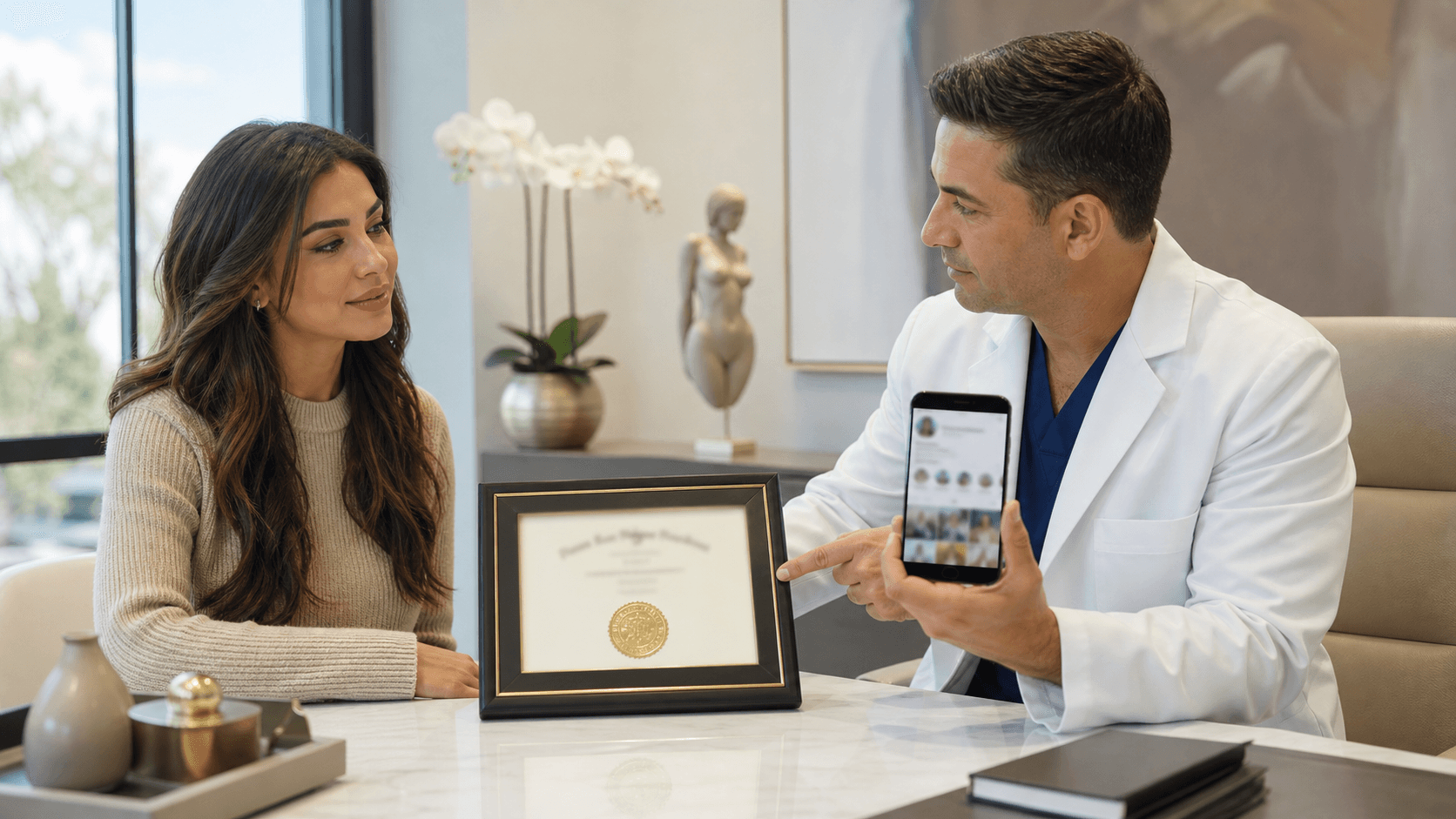
A polished social media profile can make almost any provider look highly qualified. For anyone considering plastic surgery, we believe your research should go beyond follower counts, before-and-after photos, and words like "expert." Online content can be useful, but it is not a credentialing system.
When you compare surgeons, we encourage you to verify board certification, medical licensure, surgical training, and facility standards. These steps can help you make a thoughtful choice, especially during the busy fall and holiday planning season, when it may be tempting to make a quick decision around travel, events, or time away from work.
Know What Board Certification Means
A medical license and board certification are not the same thing. A medical license permits a physician to practice medicine in a state. Board certification reflects further specialty-focused training, examinations, and ongoing professional standards.
For cosmetic plastic surgery, certification by the American Board of Plastic Surgery is an important credential to understand. Recognized by the American Board of Medical Specialties, this board certifies physicians who have completed extensive training in plastic and reconstructive surgery.
When we speak with people researching board-certified plastic surgeons in Newport Beach, CA, we encourage them to ask one clear question: "Which board certified you?" The phrase "board certified" is incomplete without the name of the certifying board.
It is wise to confirm:
- The exact board listed in the surgeon's credentials
- Whether the certification is current
- The physician's education and surgical training
- Hospital affiliations and professional qualifications
Similar-sounding board names do not always mean the same training path, examination process, or specialty focus. Clear answers should be routine. You should never feel as if asking about credentials is awkward or inappropriate.
Verify More Than a Profile Badge
A blue checkmark, a large audience, glowing comments, and media mentions may show that a provider has a strong online presence. They do not independently verify medical training, board certification, or experience with the procedure you are considering.
We recommend using trusted sources to confirm the information presented in a bio. The American Board of Medical Specialties certification directory can help you verify certification status. You can also confirm an active California medical license through the Medical Board of California.
Questions worth asking include:
- Is the physician's California medical license active?
- Does the surgeon have hospital privileges related to the procedure?
- Where will the operation take place?
- Who will provide anesthesia?
- What safety and emergency procedures are in place?
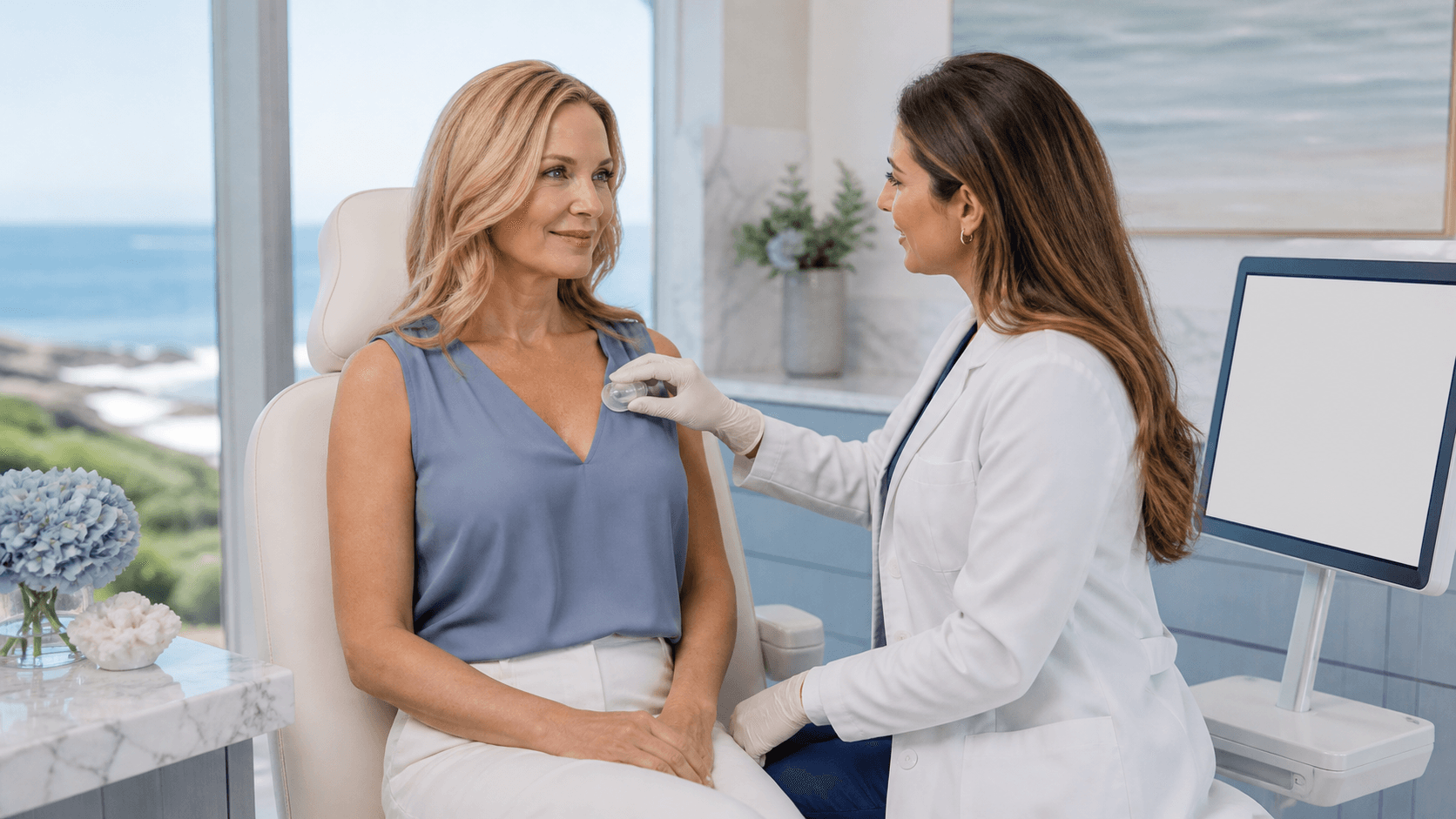
The surgical setting matters just as much as the person performing surgery. Elective procedures should take place in an appropriately accredited surgical facility or hospital, with qualified anesthesia professionals and established safety processes. During a consultation, we welcome questions about the location of surgery, the care team, and what recovery support looks like.
Use Social Media for Education, Not Proof
Social media can still have a helpful place in your research. Our educational posts may help you learn about recovery timing, common consultation questions, realistic expectations, and the differences between surgical approaches. They can also give you a feel for how a practice communicates.
Before-and-after photos can be informative, but they need context. Lighting, camera angle, makeup, facial expression, clothing, image timing, and editing can all change how a result appears on a screen. A photo does not show the full surgical plan, healing process, or the unique anatomy behind that patient's outcome.
Look for content that discusses more than polished results. Thoughtful education should include candidacy, healing, limitations, possible risks, and the fact that no procedure is right for every person. Be cautious when an account promises perfection, pressures viewers to act quickly, or suggests that one treatment fits everyone.
Rather than treating a post as proof, use it to build your question list. Then bring those questions to an in-person conversation and pair them with independent credential research.
Compare Experience, Planning, and Surgical Safety
Board certification is a strong starting point, but it is only one part of the full picture. You should also ask about a surgeon's experience with the procedure you want and how they approach planning.
For example, people considering primary or revision rhinoplasty may want to discuss nasal structure, breathing concerns, goals for appearance, and the techniques that may be appropriate. At our practice, Dr. Aaron Kosins specializes in advanced rhinoplasty, including Piezo and preservation rhinoplasty approaches when suited to the individual patient.
A meaningful consultation should include a review of your medical history, anatomy, goals, recovery expectations, and possible limitations. We want you to have room to ask questions, consider your options, and make decisions without pressure.
Surgical safety also depends on the systems around the procedure, including:
- An accredited operating facility or hospital setting
- Qualified anesthesia professionals
- Clear postoperative instructions
- A plan for communication during recovery
Popularity may bring a surgeon to your attention, but careful planning and transparent safety standards should help guide your decision.
Choose Carefully Before Holiday Plans Begin
Fall can be a practical time to begin researching a procedure, particularly if you are thinking ahead to holiday events, travel, and work schedules. Starting early gives you time to verify credentials, attend consultations, consider your options, and plan for recovery without rushing.
Social media may introduce you to surgeons and help you learn about procedures. Still, the decision should rest on verified board certification, active medical licensure, relevant experience, honest communication, and a safe surgical setting. When you take the time to confirm those details, you can move forward with clearer expectations and greater confidence.
Personalized Guidance for Your Surgical Goals
At Dr. Aaron Kosins MD, we welcome the opportunity to discuss your goals, questions, and options in a private consultation. Meet with board-certified plastic surgeons in Newport Beach, CA who prioritize thoughtful recommendations and individualized care. To begin the conversation, contact us today.